







Back
Self-release hook
LUDWIGHOOK
Our bestseller - a real powerhouse - lifting 2.5 t or 5.3 t depending on the model
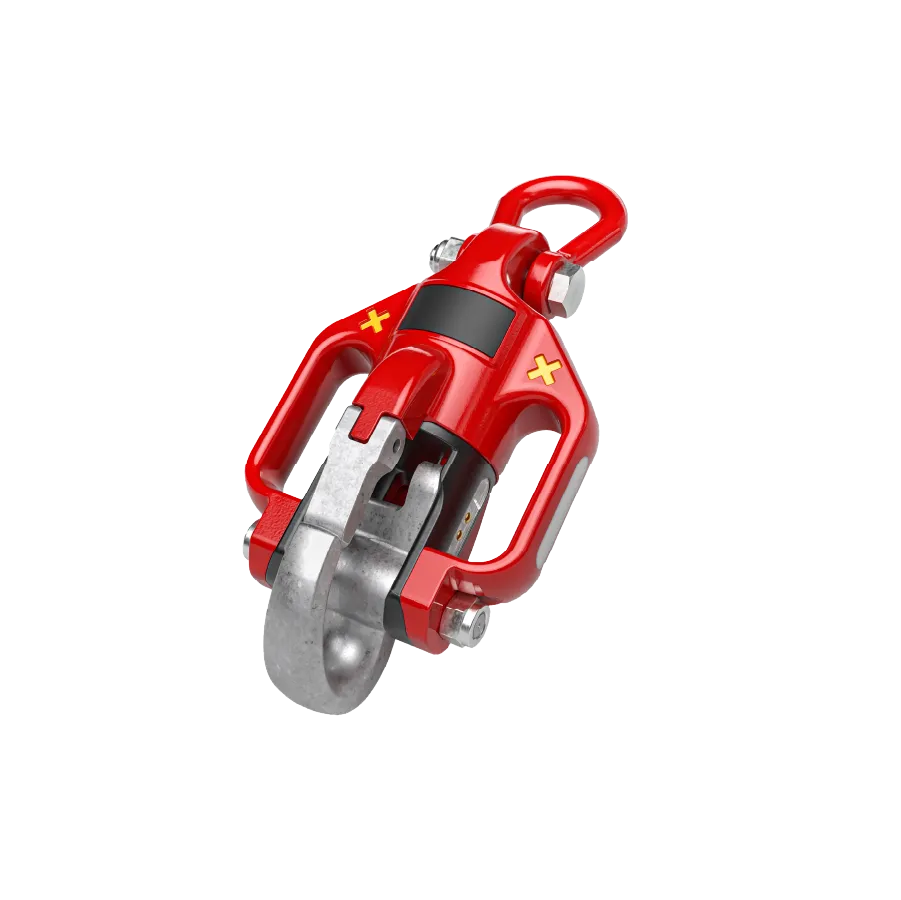
Makes every crane a little better
Whatever the requirement, one always fits: Ludwig Hook. For lifting indoors or outdoors, on every type of crane — mobile, indoor, tower or harbour. It makes work not only safer, but more efficient too.
Lifting technology, reimagined
Ladders or work platforms for unhooking become unnecessary. Our customers speed up their processes at the push of a button while increasing safety at the same time.
The right attachment for every load
You can see the different attachment methods in action in our application videos and tutorials. There you'll see not only how to sling loads so all lifting accessories stay at the crane after release, but also how to calculate and optimise the payload.
Certified by TÜV SÜD
Every Ludwig System product is tested for compliance with the relevant standards by TÜV SÜD — and we often go beyond the minimum requirements.
Technical specifications
Two models, one system
Specification
- Net weight
- Safe working load (SWL)
- Dimensions H × W × D (mm)
- Radio range
- Radio frequency
- Operating voltage
Ludwig Hook
2,5 t
- 3,3 kg
- 2,5 t
- 120 × 199 × 102
- 50 m
- 868 MHz
- 3,7 V
Ludwig Hook
5,3 t
- 6,8 kg
- 5,3 t
- 249 × 154 × 179
- 50 m
- 868 MHz
- 3,7 V
In Use
Ludwig Hook in motion
What's included & variants
Everything you need, ready to use
- 1 Operating manual
- 2 Charging tray
- 3 Remote control
- 4 Antenna
- 5 Hard-shell case
- 6 Carry strap
- 7 Ludwig Hook (1 – x)
- 8 Power supply
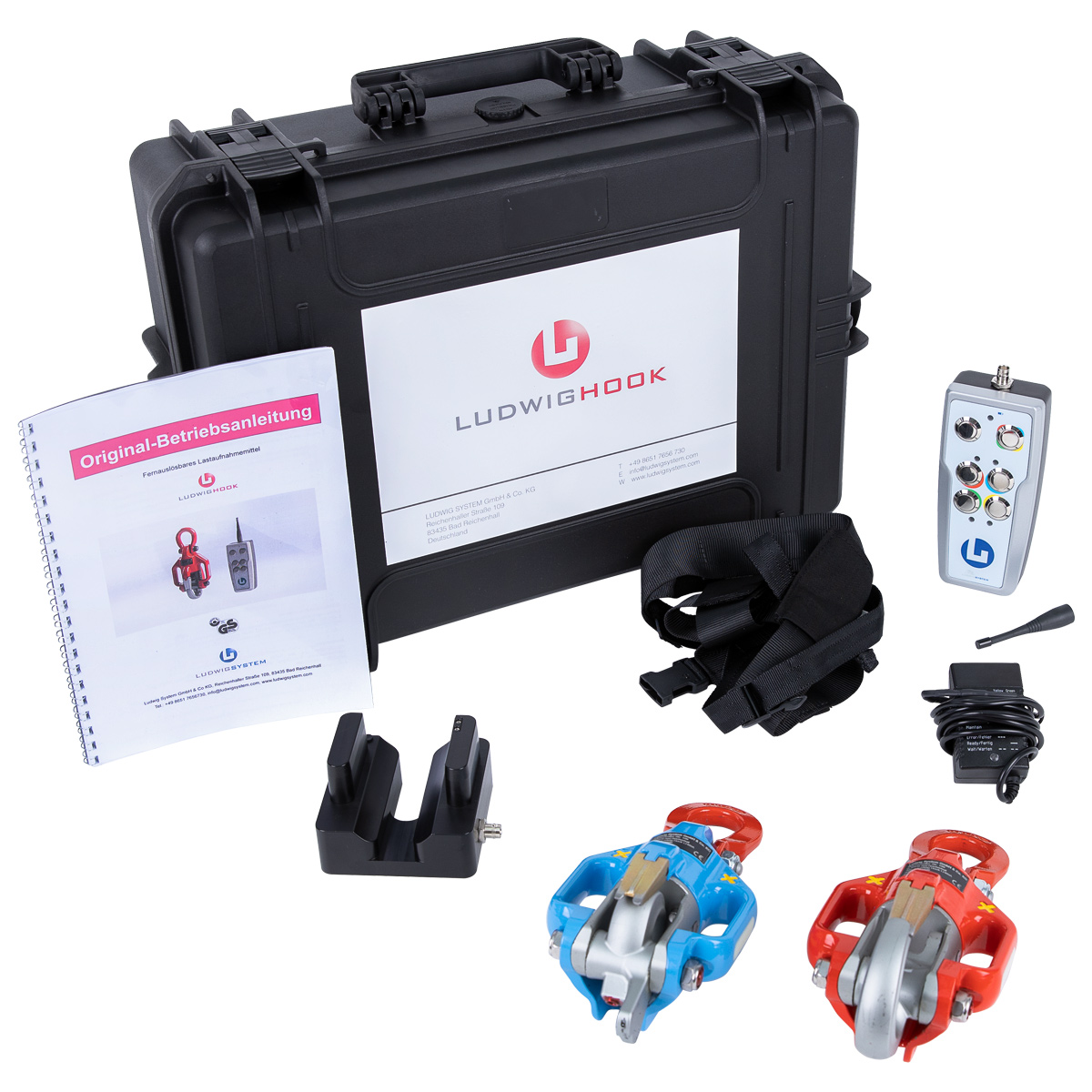
Ludwig Hook 2,5 t
What's included
- Remote control
- Charging station
- Carry straps
- Carry case
Ludwig Hook 5,3 t
What's included
- Remote control
- Charging station
- Carry straps
- Carry case
Extend your Hook
Accessories
The LudwigHook 2.5 is the successor to the LudwigHook 2.0. Most accessories fit both models — where that's not the case, the compatible model is marked.
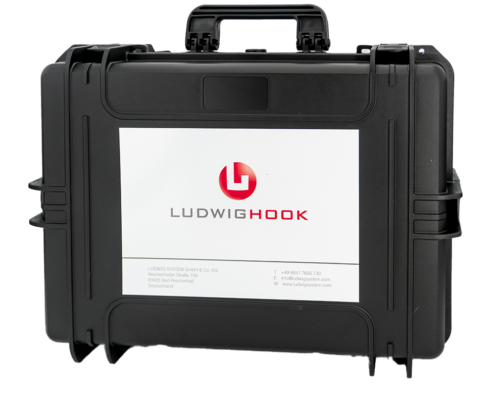
Koffer
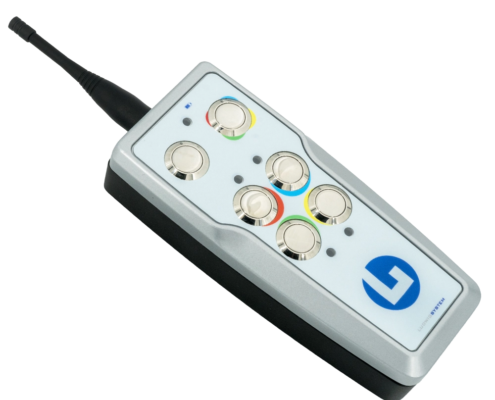
Funkfernbedienung
Part no. 70306
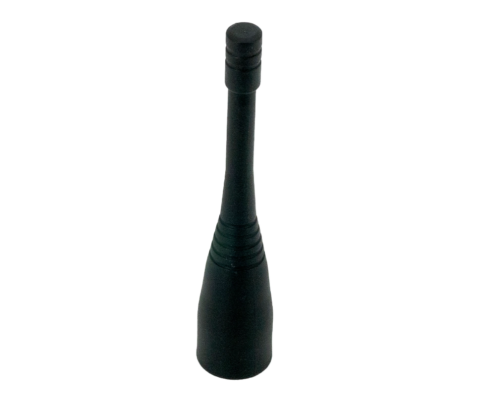
Antenne Fernbedienung
Part no. 70206
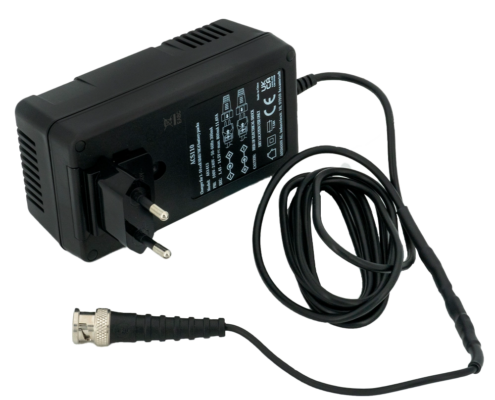
Ladekabel Fernbedienung
Part no. 70158
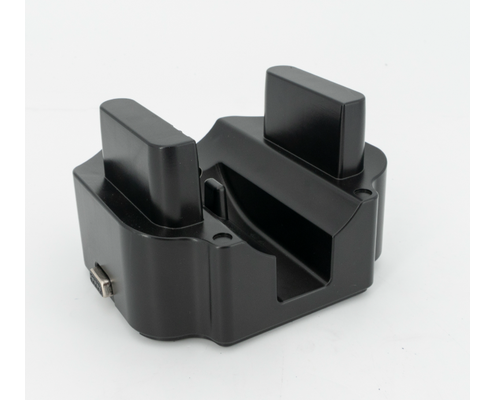
Ladeschale 2,5 T
Part no. 72295
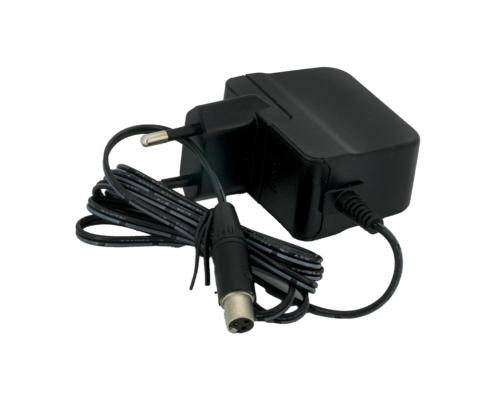
Ladestation Ladekabel
Part no. 71417
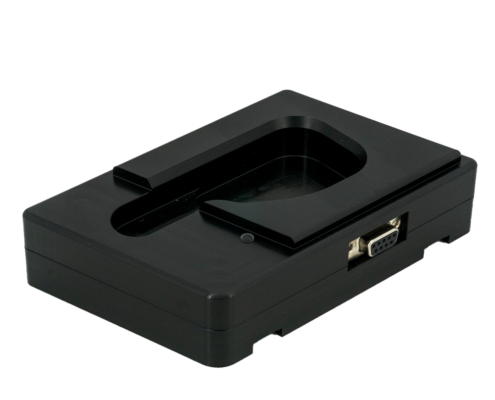
Ladetisch MLE
Part no. 70944
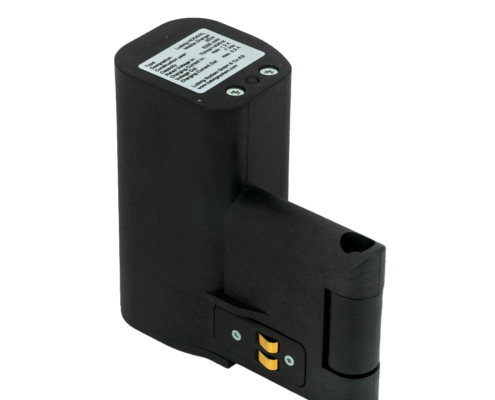
MLE – 2,5 T (2,0 T)
Part no. 71445
Mobile Ladeeinheit – MLE 5,3 T
Part no. 70949
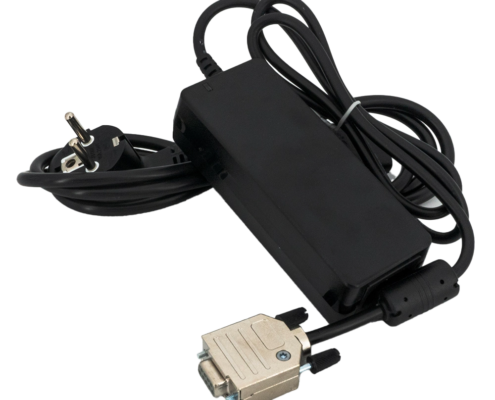
Ladetisch Netzteil
Part no. 70901
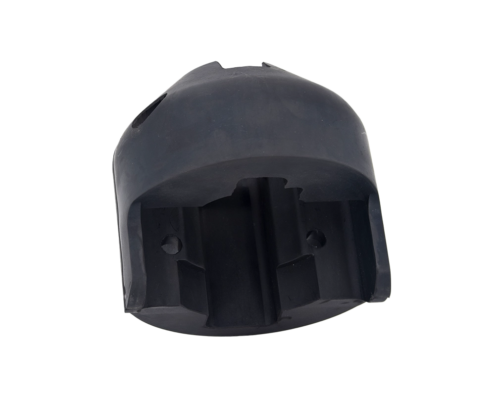
Protector – 2,5 T (2,0 T)
Part no. 71533
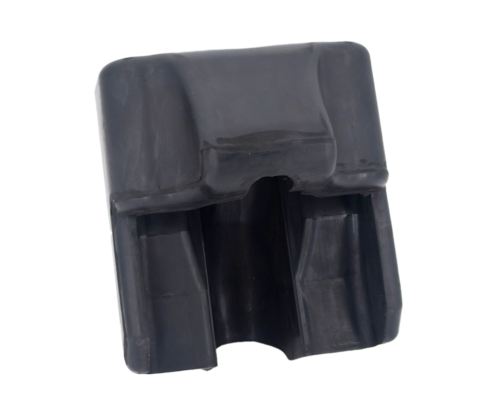
Protector – 5 T
Part no. 71269
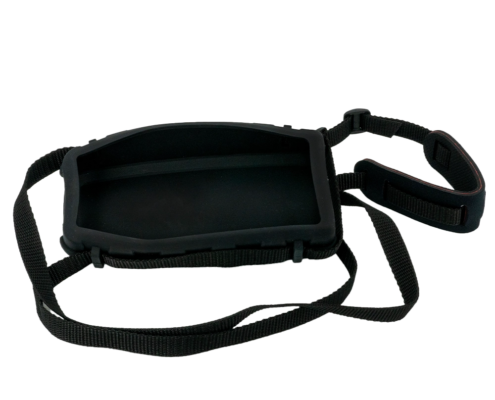
Gummischutz Funkfernbedienung
Part no. 70454
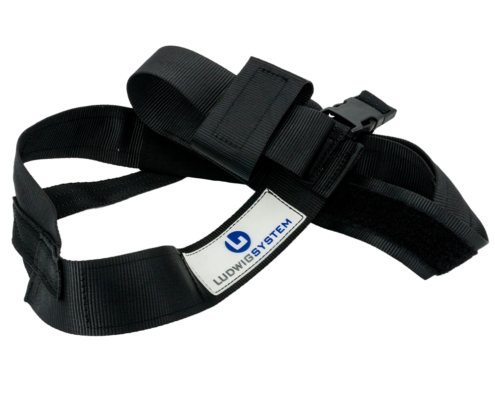
Tragegurt Sender LS
Part no. 70165
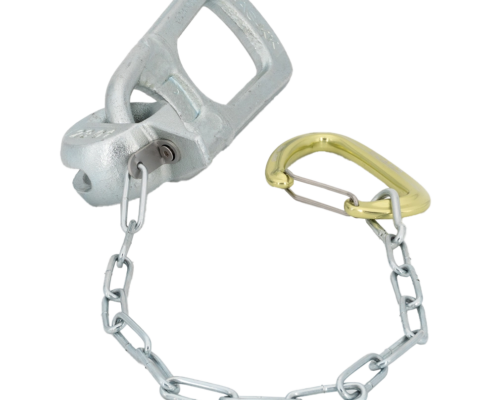
Transportanker Hilfskette
Part no. 70201
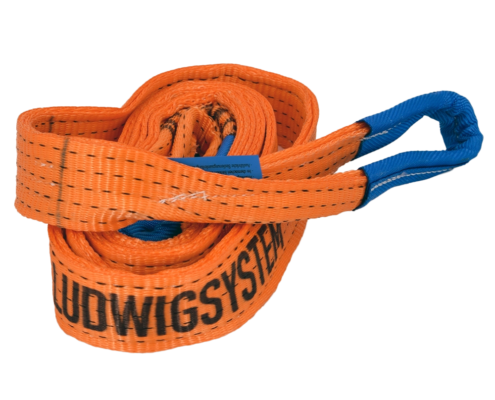
Hebeband (3 / 5 / 7 m)
Part no. 70162
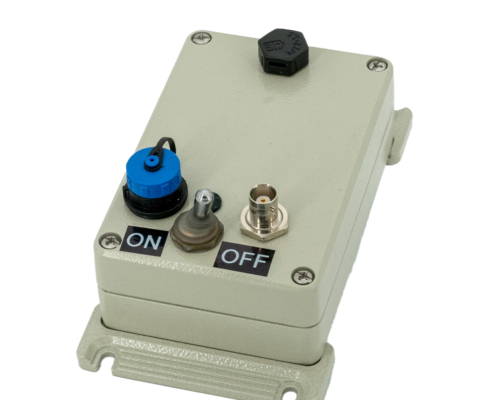
Repeater
Part no. 70955
All accessories fit both the Ludwig Hook 2.5 t and 5.3 t (model-specific variants are marked as such). To order or to ask for advice, please use our enquiry form.
Frequently asked questions
FAQ
Battery management
01 How long can I work on a single battery charge?
At least one week. Of course, battery autonomy depends on how the LudwigHook is used. What matters most: by far the largest share of power consumption comes from standby consumption (LudwigHook closed, no load) — in this state the LudwigHook is waiting for a release signal, so the radio module must stay active. The power used for the actual opening, by contrast, is relatively small, since only a small motor needs to move the locking pin a few centimetres.
In most applications, standby consumption accounts for more than 80% of total power use. So the most important tip for battery management is: don't leave the LudwigHooks closed when you're not using them — just open them, since that also switches them off.
02 How does the LudwigHook behave when its battery is empty?
It stays as it is: a closed hook remains closed and does not open. After setting down the load, it then has to be released manually via the safety latch.
03 How is the LudwigHook's battery charged?
First open the hook — ideally by remote control. Then:
- LudwigHook 2.5: place it in the charging mould
- LudwigHook 5.3: plug in the mobile charger (MLE), which must have been sufficiently charged on the charging table beforehand
04 Can I charge the LudwigHook while it's closed?
LudwigHooks should generally be charged in the open state — open it by radio first, then charge. But what if the battery is so flat that the LudwigHook can no longer be opened by radio? Here the models differ:
- LudwigHook 2.5: open it mechanically by prying the locking lever open with a screwdriver.
- LudwigHook 5.3: plug in the mobile charger (MLE) and charge the hook for at least 15 minutes, then remove the MLE, open the hook by remote control, plug the MLE back in and finish the charging process. Note: on this model, the locking lever cannot be pried open.
05 Why doesn't my battery last as long as stated?
The most likely reason is that the LudwigHook was left locked longer than necessary — in this state it uses a lot of power (standby). Please always open the LudwigHooks when they are not in use.
06 Is there a low-battery warning?
Yes, all our LudwigHooks have an LED on the side. It starts blinking red when about 20% battery capacity remains — that's your cue to charge the hooks as soon as possible. You can still keep working with the LudwigHooks for a while, though.
Safety
01 Is the LudwigHook approved? Which standards is it certified to?
The LudwigHook complies with the European directives, in particular the Machinery Regulation (formerly the Machinery Directive) as well as the Low Voltage and EMC Directives.
It has also been tested for conformity with US and Canadian standards: it meets OSHA workplace safety requirements and the relevant ASME (mechanical), FCC & IC (radio & EMC) and UL & CSA (electrical) standards.
We always commission TÜV SÜD to verify our products' conformity with the applicable standards.
02 What happens if I accidentally press a button on the remote control?
Accidentally pressing a single button on the remote control has no effect, because our concept is based on 2-button operation: you must first press the enable button (no colour), and then also a release button. The release button can either be a colour button, which releases only the LudwigHooks of that colour, or the all-colour button, which releases every LudwigHook in the system.
03 Does a LudwigHook open if its battery runs out?
No, the LudwigHook remains closed. There is no risk of unintended opening. It can then be used like an ordinary mechanical hook, i.e. attaching and detaching is done manually via the safety latch.
04 Can a load be accidentally released during lifting and fall down?
The load stays on the hook, even if the buttons of the 2-button operation were pressed correctly. The reason is our safety mechanism under tension: as soon as the LudwigHook detects a load, it shuts itself down automatically and ignores the release signal.
Note: for technical reasons, very small loads cannot always be reliably detected, which can lead to accidental release. That's why we've limited the LudwigHook's working range to loads above 25 kg for the LudwigHook 2.5 and above 50 kg for the LudwigHook 5.3. Loads above this minimum load cannot be released accidentally — and for lighter loads you wouldn't need a crane anyway.
Tip: try the safety mechanism yourself. Slowly lift a load above the minimum load and watch the LED on the side of the LudwigHook: on the 2.5 t hook it turns off, on the 5.3 t hook it switches to blue.
05 Can an operator accidentally open the wrong LudwigHooks if several systems are working close together?
No, with correct configuration this is ruled out. We equip every LudwigHook system with a code that is only ever assigned once. This code is part of the release signal sent by that system's remote control. LudwigHooks programmed to the same code accept the incoming release signal and open accordingly. Any LudwigHooks programmed to a different code ignore the release signal.
06 What is the safety factor?
Like all lifting accessories, our hooks must be able to lift a multiple of the rated load (WLL). The safety factor required by the standard is 3 in Europe, 3.6 in the US and even 4 in Australia. Our LudwigHooks meet the requirements everywhere.
07 Can you get hurt if you get too close to the LudwigHook while it opens?
Yes, there is a pinching risk at the rear of the LudwigHook, where the rotating hook moves during opening. This movement is spring-driven and needs enough force to release even with some friction at the lifting point. Please keep clear of the opening area.
The whole idea, in any case, is that you're not nearby when the LudwigHooks open — that's exactly the safety benefit of radio control.
Operation
01 How do I close the LudwigHook?
The LudwigHook is closed by pushing the handle (the moving part of the LudwigHook) into the housing. We recommend holding the LudwigHook from the front (facing the safety latch) with your left hand on the left grip, and turning the handle shut with your right thumb from behind.
There's a small technical difference between the LudwigHook 2.5 and the LudwigHook 5.3: on the 2.5, the handle engages immediately as it's turned shut, while on the 5.3 it must be held in the sling position for a moment until the locking pin has extended.
02 How do I open the LudwigHook?
By default via the remote control: first press the enable button (no colour, top left), then one of the release buttons (colour or group button).
03 How do I switch the LudwigHook on and off?
The LudwigHook has no on/off switch in the classic sense. Instead, it switches itself on when locked and off again when opened: a switch inside the LudwigHook detects the "open" and "closed" positions and switches accordingly to "off" or "on". You can also tell easily from the LED — hook off: LED off, hook on: LED on.
04 How can I release a load still hanging on the LudwigHook if it won't open by radio?
Via the safety latch, just like with an ordinary hook.
05 Why does my LudwigHook open again immediately after locking, before I can attach the load?
This is another safety feature at work. Our hooks lock via a locking pin that engages in the notch of the handle. If this pin does not travel all the way to its maximum position in the notch, the lock is incomplete. To prevent a lift in this state, the system retracts the pin and opens the hook again — better not locked at all than locked badly.
An incomplete lock like this can be caused by dirt in the notch preventing it from fully engaging. In that case, clean the notch and lock again.
06 What do the colours of the LED on the side of the LudwigHook mean?
This depends on the model:
LudwigHook 2.0: Red (steady) = closed and unloaded (can be opened); Off = open or "closed and loaded"; Red (blinking) = fault, most likely the battery.
LudwigHook 2.5: Green (steady) = closed and unloaded (can be opened); Off = open or "closed and loaded"; Red (blinking) = fault, most likely the battery.
LudwigHook 5.3: Green (steady) = closed and unloaded (can be opened); Off = open; Blue = "closed and loaded"; Red (blinking) = fault, most likely the battery.
Sales & Service
01 Are there mandatory recurring inspections?
Yes. Almost every country has specific rules for recurring inspection. Our product is subject to the rules for lifting accessories; in Germany this is the UVV inspection, which must be carried out at least once a year.
We're happy to offer our European customers a combined annual inspection. Besides the legally required inspection, this includes a complete service with inspection and, if needed, repair of all functional requirements such as battery quality, radio range, safety mechanism under tension and spring force.
02 Where can I buy the LudwigHook?
For Europe: the LudwigHook can be purchased either directly from Ludwig System or through one of our dealers.
Outside Europe it depends on the country. In the US and Canada, our partner OTH holds the exclusive distribution rights. We have distribution partners in many other countries; everywhere else, only direct sales are available.
03 Can I test or rent the LudwigHooks?
Yes, both are possible. We can either arrange a test appointment where we demonstrate the LudwigHooks on site, or offer you a rental model with a purchase option: you first rent the LudwigHooks, and if you like them, you can stop the rental at any time and buy instead — in that case we credit 75% of the rental payments already made towards the purchase price.
04 Are product trainings available?
Yes. Either one of our staff visits you on site, or we run the training online.
Rigging and loads
01 What loads may I attach to the LudwigHook when several LudwigHooks are used per load and a sling angle occurs?
The same rules apply as generally used in lifting technology and for load reductions with multiple legs and sling angles.
The first question to ask: how many legs reliably carry the load? If there's a risk that a leg carries little or no load, it must not be counted in the calculation.
The usual reductions also apply depending on the sling angle: up to 45° = 30% reduction; between 45° and 60° = 45% reduction.
Other products
Coming Soon
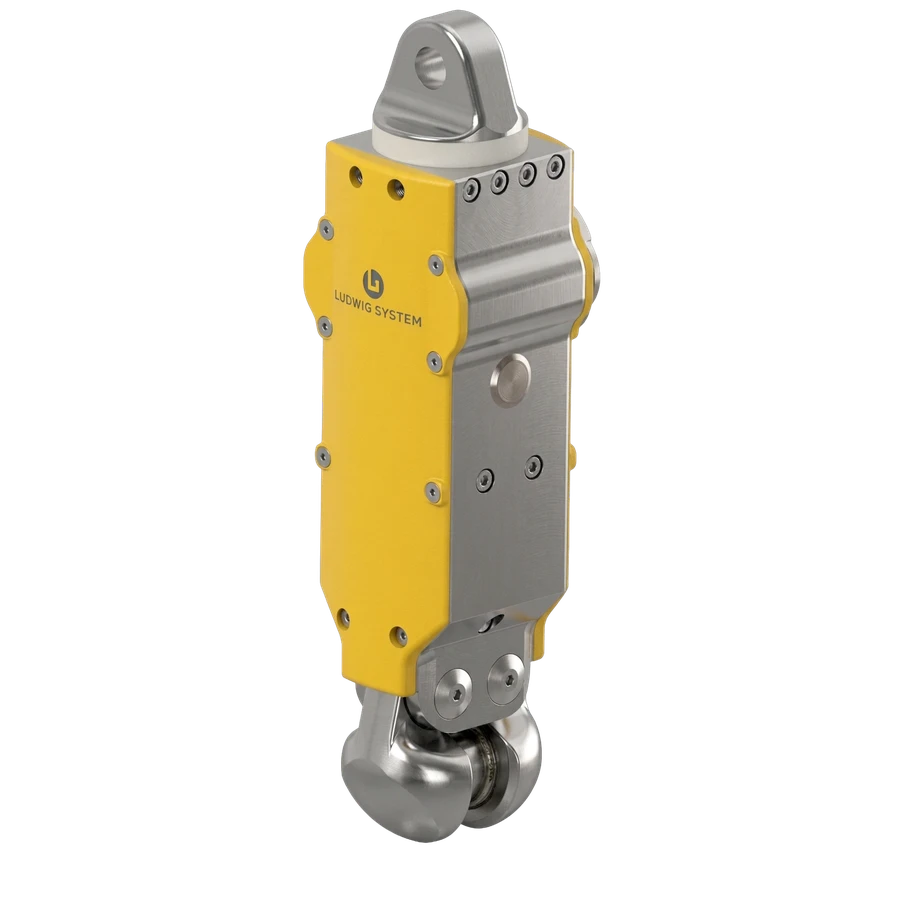
In-house product
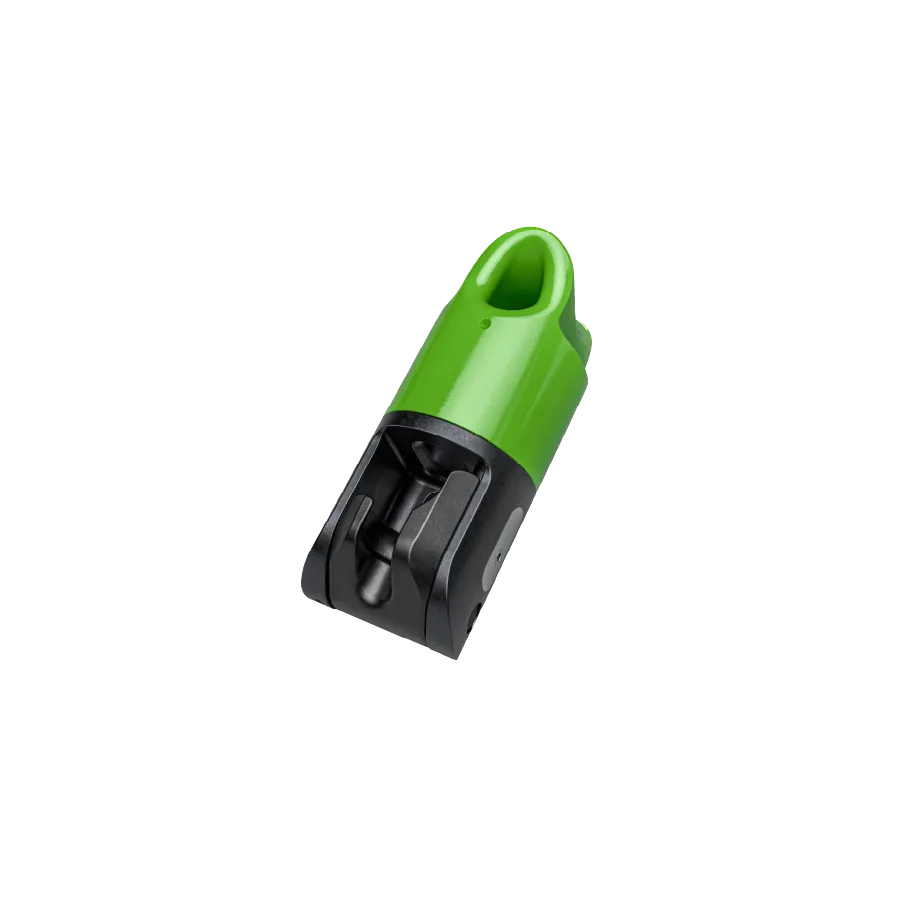
LUDWIGCATCHER
Radio-controlled lifting system for precast concrete elements – built for transport anchors, attach and detach by radio.
In-house product
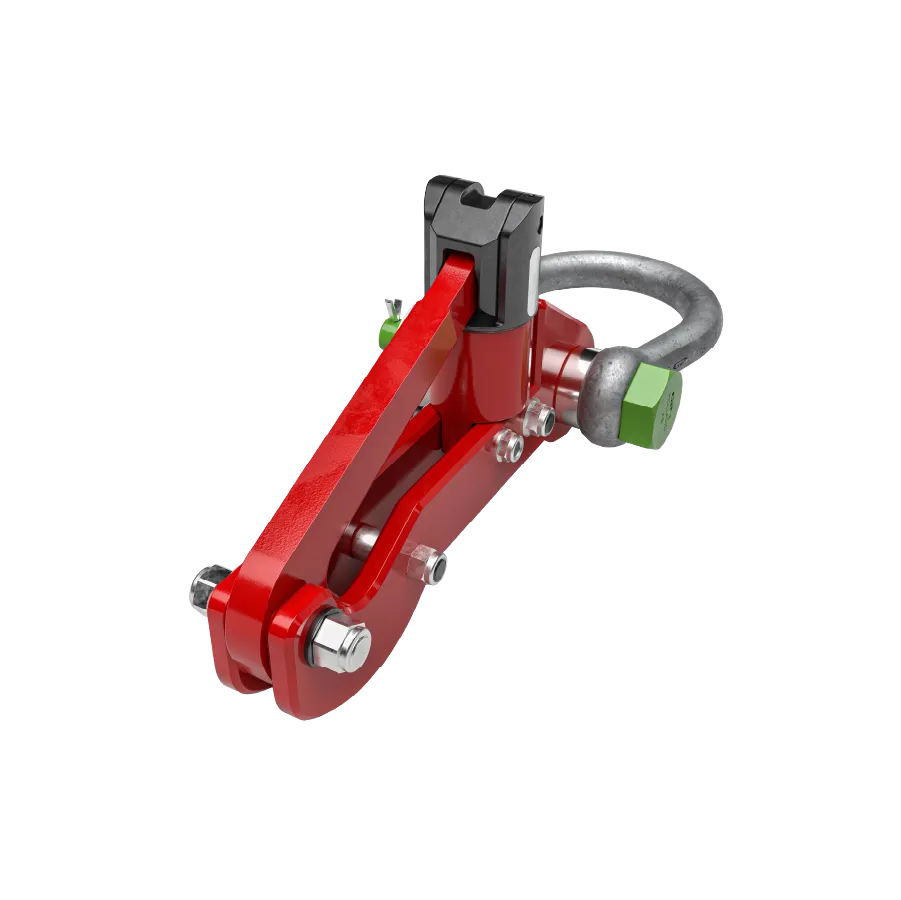
LUDWIGCHOKER
Radio-controlled choker for forestry – a yarder accessory.
In-house product
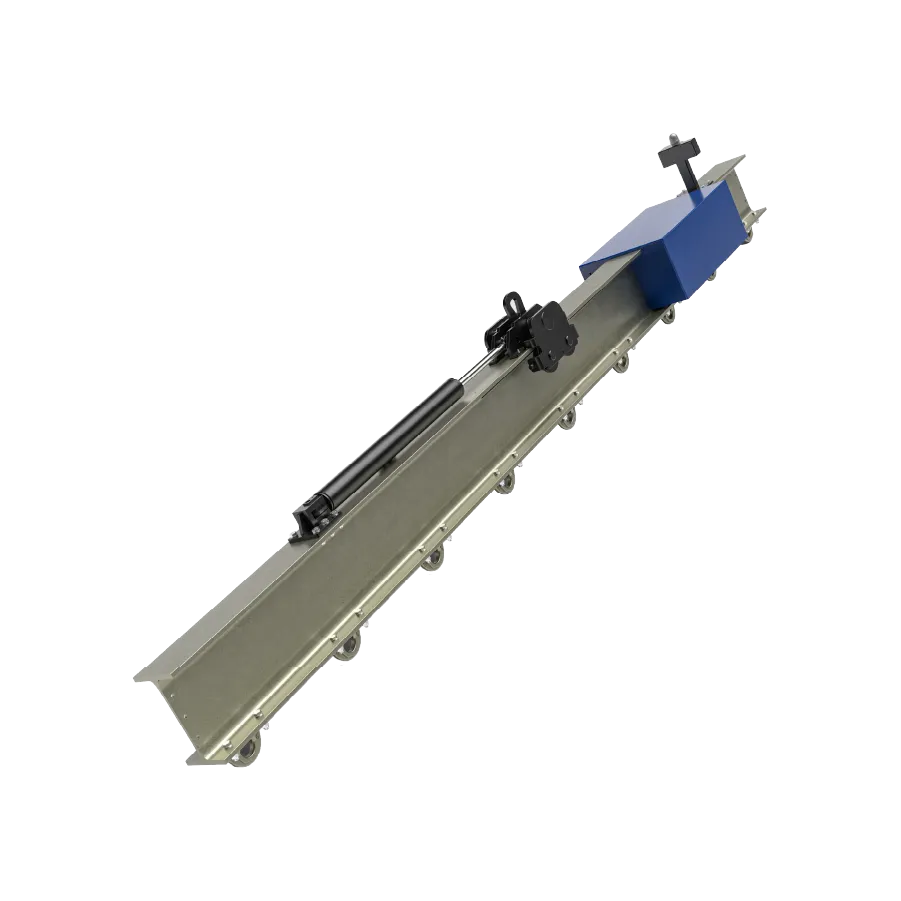
LUDWIGBULLI
Automatic release hook for traction winches and crash tests
In-house product
LUDWIGTRAVERSE
Spreader beam system for balancing loads
Enquiry